
Why Practice Lectio Divina?
By Joshua Harper, Associate Pastor – Resident – Brookside Campus “The Word of Scripture should never stop sounding in your ears and working in you all day long, just li...

By Benjamin Asante, Associate Pastor – Resident – Shawnee Campus Lectio Divina may be an ancient spiritual practice, but for many people, it’s a new concept. This Latin term refers to a divine or sacred reading that goes beyond merely reading the Bible to gain information. It is a practice of prayerfully reading and meditating […]
By Benjamin Asante, Associate Pastor – Resident – Shawnee Campus
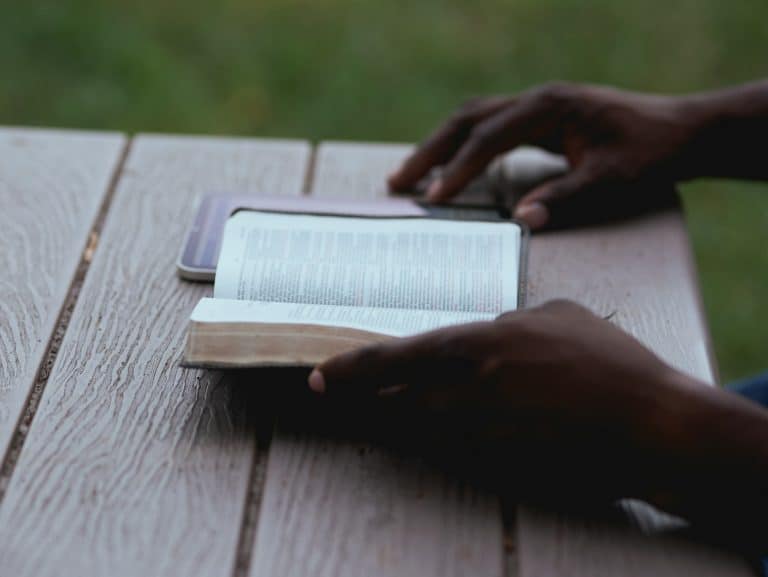
Lectio Divina may be an ancient spiritual practice, but for many people, it’s a new concept. This Latin term refers to a divine or sacred reading that goes beyond merely reading the Bible to gain information. It is a practice of prayerfully reading and meditating on Scripture.
Lectio divina focuses on encountering God through his word in four ways—reading slowly, listening, reflecting, and responding in prayer.
The Four Traditional Movements
1. Lectio — Read
– Read a short passage slowly, perhaps several times.
– Pay attention to a word, phrase, or verse that stands out.
– What does the text say?
– Avoid “reading into the text.”
Sometimes we have come to an understanding of a certain Scripture passage based on what we have heard a preacher or other believers say. While it is good to consider interpretations from others, it may not stir curiosity in us for God to speak to us in a new way, or bring new insights and understanding relevant to the contemporary world we live in. Preconceived notions should be taken into consideration and set aside so we can genuinely approach the text from a place of curiosity.
2. Meditatio — Meditate
– Reflect deeply on what you have read.
– Consider what God may be drawing your attention to.
– What is God saying to you through this passage?
Psalm 23 is a chapter I love dearly. Some questions I have considered about this psalm are: what does it mean for God to be my shepherd? What does it look like for God to be my shepherd when I am making decisions about where to stay, whom to marry, and what to do with the next years of my life? What career path should I choose, or how should I approach a situation in my workplace?
Taking time to meditate on Scripture provides a space to consider our deep heart questions and allow our minds to ruminate over the word of God and gain understanding.
Growing up in Ghana, my mum and grandma had flocks of sheep that my siblings and I helped take care of, so I actually had the opportunity to be a shepherd boy! There were times when I had to guide them when a car came down the path we were on. I would make sure to direct the sheep away from the road and lead them to a safer place. Leading them to places where they could find food was also my responsibility as their shepherd. Sometimes, I would go to people’s houses to collect leftover plantain peels and cassava leaves for them to eat. Dogs in Ghana are often allowed to walk on the streets without their owners. Sometimes, these dogs would attack any sheep they came across. I always carried my rod to protect the sheep from the dogs and kept them safe.
Because of my real experience as a shepherd boy, Psalm 23 has a very relatable message for me. Most likely you have not had that experience growing up. However, you may have life experiences that bring other Scripture passages into focus for you, in a way that would not resonate in the same way for someone else. Taking time to meditate on the Scriptures can help us relate them to our personal experiences, and gain insight from God in a deeper way.
3. Oratio — Pray
– Respond to God in prayer based on what you have encountered.
– This could be thanksgiving, confession, petition, or surrender.
– How should you respond to God?
Prayer is one of the disciplines the Bible spends a great amount of time encouraging believers to do. From my example about Psalm 23, I can pray a heartfelt prayer by saying to God, “I understand today you are my shepherd. I invite you to shepherd every area of my life, lead me through the various seasons I am in, provide for me when I cannot provide for myself, because you know better than I. Please guide my path all the days of my life, protect and preserve me as the shepherd preserves the sheep from dogs and wolves.”
4. Contemplatio — Contemplate
– Become quiet and rest in God’s presence.
– You are not trying to analyze the passage anymore.
– Simply remain attentive to God.
One of the things to guard your heart and mind against is distractions. In this moment, there might be distractions, causing you to lose focus or not find rest in God’s presence. Do not force your mind, but allow your mind to just be still in God’s presence. The Bible mentions many times that we should be still before the Lord and simply know that he is God. Take this time to rest in him. Many things are competing for our attention, and spiritual formation has become difficult for some of us to cultivate–leaving us spiritually dry and bankrupt.
Lectio divina is one of the disciplines that helps us stay grounded in God, enriching our souls and spirits, and encouraging us to find Scripture to be more meaningful and relatable through the time spent immersed in it.


Sex: It’s Worth Waiting For by Greg Speck
Greg Speck has been doing youth ministry for more than 30 years and has a remarkable ability to connect with students on difficult topics in ways that are relevant and helpful. This is a great read for any teenager who has questions about sex.
Sex Has a Price Tag: Discussions About Sexuality, Spirituality and Self Respect by Pam Stenzel
Pam Stenzel is not shy about the subject of teenage sexuality. She is very blunt, but also very clear. This book is addressed to both boys and girls. You will find personal testimonies, medical stats and practical solutions in this book.
Pure Eyes: A Man’s Guide to Sexual Integrity by Craig Gross and Steven Luff
Craig Gross is the founder of XXXChurch, which is a ministry to people who struggle with pornography and sex addiction, as well as to people in the sex industry. This is a great book designed for men and the struggles they face to maintain sexual purity.
Pure Heart: A Woman’s Guide to Sexual Integrity by Shellie Warren
This is an official resource of XXXChurch and is the female counterpart to Pure Eyes. This book addresses real and honest issues that women face in regards to sexual temptation and maintaining sexual purity.
Sex, Dating and Relationships by Gerald Hiestand
You will find some very clear, practical, and more importantly biblical wisdom in this book. This may be a great book for students and parents to read through together.
Washed and Waiting: Reflections on Christian Faithfulness and Homosexuality by Wesley Hill
The subject of homosexuality is increasingly a significant topic of conversation. With so many voices and opinions on the issue out there, Wesley Hill (a gay Christian) provides some helpful words on how the church can begin to think and talk about it in ways that are both faithful to scripture and helpful to those with questions and struggles.
Hooked: New Science on How Casual Sex Is Affecting Our Children by Joe McIlhaney Jr., and Freda McKissic Bush.
This is one of the best book we have read, thus far, on the subject of sexuality and adolescence. It is a well-researched book that is very accessible for both teens and adults. We have found it very insightful and would strongly recommend you read this book.
So Sexy So Soon: The New Sexualized Childhood and What Parents Can do to Protect Their Kids by Diane E. Levin and Jean Kilbourne
A fabulous commentary on the over-sexualized culture that our children are growing up in and how it is impacting their sexual development. While it is a great book on how to talk to your children about sex, there is a great deal on practical information for parents on how to guide and protect their children in a sex-saturated culture.
Real Sex: The Naked Truth about Chastity by Lauren Winner
This is a phenomenal book for both parents and older teenagers. It approaches the subject of sex in a much more holistic sense, as well as in a communal sense.
Wired for Intimacy: How Pornography Hijacks the Male Brain by William Struthers
While this may not be all that helpful for teenagers, it is a great resource on understanding how pornography hijacks our brain and distorts the way we think about sex.
Teaching Your Child Healthy Sexuality: A Biblical Approach to Prepare Them for Life by Jim Burns
This book is similar to The Purity Code, but addresses you, as the parent, giving valuable ideas on how to address some of the biggest sexual issues our teenagers are facing today.
Sex, Dating and Relationships by Gerald Hiestand
You will find some very clear, practical, and more importantly biblical wisdom in this book. This may be a great book for students and parents to read through together.
Washed and Waiting: Reflections on Christian Faithfulness and Homosexuality by Wesley Hill
The subject of homosexuality is increasingly a significant topic of conversation. With so many voices and opinions on the issue out there, Wesley Hill (a gay Christian) provides some helpful words on how the church can begin to think and talk about it in ways that are both faithful to scripture and helpful to those with questions and struggles.
purelifeministries.org
Founded by a former sex addict and his wife, this ministry offers articles and resources for those who struggle with sexual sin and for spouses of those who struggle.
xxxchurch.com
One of the leading resources in helping men and women fight the battle for their sexual purity, XXX Church offers resources, blogs, videos and confessional opportunities for men and women struggling with sexual sin. Also, they feature a section for those dealing with the repercussions of their spouse’s sin.
fightthenewdrug.org
Fight the New Drug’s message is based on science and facts. In a sense, science is an international currency. They explain why porn is harmful by educating people about the negative psychological and physical reactions it causes.
Can I Ask That? Volume 1 (Student Guide) by Jim Candy, Brad M. Griffin, and Kara Powell
Can I Ask That? Volume 2 (Student Guide) by Jim Candy, Brad M. Griffin, and Kara Powell
New City Catechism by Tim Keller
Just Do Something: A Liberating Approach to Finding God’s Will by Kevin DeYoung
Called: The Crisis and Promise of Following Jesus Today by Mark Labberton
Life Together by Dietrich Bonhoeffer
Before You Go: Following Jesus and Growing in Your Faith After High School by Gerald Fadayomi
Growing With: Every Parent’s Guide to Helping Teenagers and Young Adults Thrive in Their Faith, Family, and Future by Kara Powell and Steven Argue
The Teenage Brain: A Neuroscientist’s Survival Guide to Raising Adolescents and Young Adults by Frances E. Jensen
Brainstorm: The Power and Purpose of the Teenage Brain by Daniel J. Siegel
Understanding Your Young Teen: Practical Wisdom for Parents by Mark Oestreicher
Parenting Beyond Your Capacity: Connect Your Family to a Wider Community by Reggie Joiner and Carey Nieuhof
Center for Parent and Youth Understanding
Digital Kids Initiative
Fuller Youth Institute
HomeWord
Sticky Faith by Chap Clark and Kara Powell
Sticky Faith Guide for Your Family by Kara Powell
Like Dew Your Youth by Eugene Peterson
Give Them Grace by Elyse Fitzpatrick
Age of Opportunity by Paul Tripp
The Space Between by Walt Mueller
At Christ Community, we believe communion is one of two sacraments of the church, with baptism being the other. A sacrament is a directive, something you do because someone told you to do it or a command. Communion is a sacrament because Jesus commanded the church to practice it. Communion is a ceremony the church observes and practices as a sign of the grace God has shown to each of us. Communion is a way for those who have experienced the saving grace of Jesus to remember and celebrate what Jesus did when He died on the cross, and God raised Him from the dead.
Children are naturally curious and commonly ask questions about communion. If your family is involved at church, they may start asking these questions at a really young age. If the question is asked, it is the time to talk about communion.
Communion is for people who have made the choice to live their lives for Jesus and follow Him. They will eat small pieces of bread to remember Jesus’ body, which was broken because of His love for us. They will also drink juice to remember Jesus bled because of His love for us. Communion has other names. Sometimes communion is called the Lord’s Supper and communion can also be called the Eucharist, which means giving thanks.
Communion is our way of remembering the last supper Jesus had with the disciples before He was arrested. That is why it is sometimes called the Lord’s Supper. The story about this meal with Jesus and the disciples is found in Matthew 26:17-30, Mark 14:12-26, Luke 22:7-23, and 1 Corinthians 11:23-26.Jesus said some very important words to His disciples during this meal. He said “Do this in remembrance of Me.” (Luke 22:19, 1 Corinthians 11:24-25). We include communion in our worship service as a special way to remember who Jesus is and what He did for each of us.1 Corinthians 11:26 says, “For whenever you eat this bread and drink this cup, you proclaim the Lord’s death until he comes.” When we take communion, we are reminded of Jesus’ death and we’re able to thank Jesus for sacrificing His life for ours on the cross.
People who are part of God’s family, and have asked Jesus to forgive their sins, are invited to participate in communion. Participating in the holy sacrament of communion reflects living lives of worship and obedience to God.How do you become a part of God’s family? You pray and surrender your entire life to Jesus and ask God to forgive you of your sins. The Holy Spirit gives you strength and wisdom to obey.
Each Christ Community campus has resources available to help guide your conversation with your children about Communion. If you feel your child is ready for more, please contact your Children’s or Student Pastor.
God Made All of Me! Justin and Lindsey Holcomb
God Made Boys and Girls: Helping Children Understand the Gift of Gender Marty Machowski
God Made Your Body Jim Burns
How God Makes Babies Jim Burns
Teaching Your Children Healthy Sexuality: A Biblical Approach to Prepare Them for Life Jim Burns
Goodbye to Goodbyes Tales That Tell the Truth Lauren Chandler and Catalina Echeverri
Someone I Love Died Christine Harder Tangvald
When God Made You Matthew Paul Turner
When God Made You Jane G. Meyer
The Gospel In Color – For Kids: A Theology of Racial
Reconciliation for Kids Curtis A. Woods, Jarvis J. Williams, Pip Craighead, Rommel Ruiz
God Made Me AND You: Celebrating God’s Design for Ethnic Diversity Shai Linne, Trish Mahoney
God’s Very Good Idea: A True Story of God’s Delightfully Different Family Trillia Newbell, Catalina Echeverri
It Will be Okay: Trusting God Through Fear and Change Lysa TerKeurst
Hey Warrior Karen Young
Zoe’s Hiding Place David Powlison
Unto Us Family Worship Guide Doorposts Music
Advent Storybook Laura Richie
The Christmas Story Autumn Ward Preschool
The Advent Storybook: 25 Bible Stories Showing Why Jesus Came Laura Richie and Ian Dale
The Christmas Promise Alison Mitchell, Catalina Echeverri
Song of the Stars: A Christmas Story Sally Lloyd Jones
The Garden, The Curtain, The Cross Carl Laferton
The Easter Story Patricia A Pingry Preschool
The Story of the Easter Robin Dandi Daley MacKall Preschool
The Easter Story Autumn Ward Preschool
Holy Week: An Emotions Primer Danielle Hitchen and Jessica Blanchard Preschool
Benjamin’s Box: The Story of the Resurrection Eggs
The Story of the Resurrection Eggs Melody Carlson and Jack Stockman
Easter Love Letters from God
3-1 A Picture of God Joanne Marxhausen
Action Bible Sergio Cariello
The Biggest Story Kevin DeYoung
The Read-Aloud Book of Bible Stories Amy Steedman
The Story of God’s Love for You Sally Lloyd-Jones
Thoughts that Make Your Heart Sing Sally Lloyd- Jones
The Radical Book for Kids George Thornton
Bible Infographics Harvest Kids
Notes from Jesus Mikal Keefer
I Am: Names of God Diane Stortz
The Case for Christ for Kids Book Series Lee Strobel
Indescribable: 100 Devotions for Kids About God and Science Louie Giglio
Exploring Grace Together: 40 Devotionals for the Family Jessica Thompson and Elyse M. Fitzpatrick
Lord’s Prayer Cards She Reads Truth
Praying in Color Sybil MacBeth
The Ology Marty Machowski
I Will Thank You! Kids Read Truth, guided journal, scripture, and art
The Big God Story – Michelle Anthony
Images of God Marie – Hélène Delval
Everything A Child Should Know About God – Kenneth N. Taylor
Jesus Storybook – Sally Lloyd- Jones
WOW! The Good News in Four Words – Dandi Daley Mackall
God’s Very Good Idea – Trillia Newbell
I Am: The Names of God for Little Ones – Diane Stortz
The Storm That Stopped – Alison Mitchell
Goodbye to Goodbyes – Lauren Chandler
The Friend Who Forgives – Dan DeWitt
When I Pray for You Matthew – Paul Turner
The One O’Clock Miracle – Alison Mitchell
The Read-Aloud Bible Stories – Ella K. Lindvall
Loved: The Lord’s Prayer – Sally Lloyd Jones
The Beginner’s Gospel Story Bible – Jared Kennedy, Trish Mahoney
The Whole-Brain Child: 12 Revolutionary Strategies
to Nurture Your Child’s Developing Mind – Daniel J. Siegel and Tina Payne Bryson
The Look and Tell Bible – Thomas Nelson
God Bless You & Goodnight – Hannah Hall
Who Sang the First Song? – Ellie Holcomb
You Are – Emil Assell
Tonight – Emily Assell
The Read-Aloud Bible Stories – Ella K. Lindvall
Loved: The Lord’s Prayer – Sally Lloyd Jones
The Biggest Story ABC – Kevin DeYoung and Don Clark
Spiritual Parenting – Michelle Anthony
Don’t Miss It – Reggie Joiner and Kristen Ivy
Mom Set Free – Jeannie Cunnion
Bible Praying for Parents – Keith Ferrin
Kids Can! – Leah Archibald
Faith begins at Home – Mark Holmen
Grace Based Parenting – Dr. Tim Kimmel
Pass It On – Jim Burns and Jeremy Lee
Faithful Families – Creating Sacred Moments at Home – Traci Smith
Becoming a Spiritually Healthy Family – Michelle Anthony
Faith Conversations for Families – Jim Burns
The Sticky Faith Guide For Your Family – Dr. Kara Powell
Parenting: 14 Gospel Principles That Can Radically Change Your Family – Paul David Tripp
Handfree Mama: A Guide to Putting Down the Phone, Burning the To-Do List, and Letting Go of
Perfection to Grasp What Really Matters! – Rachel Stafford
Raising Grateful Kids in an Ungrateful World – Kristen Welch